Private project
Inventory Management
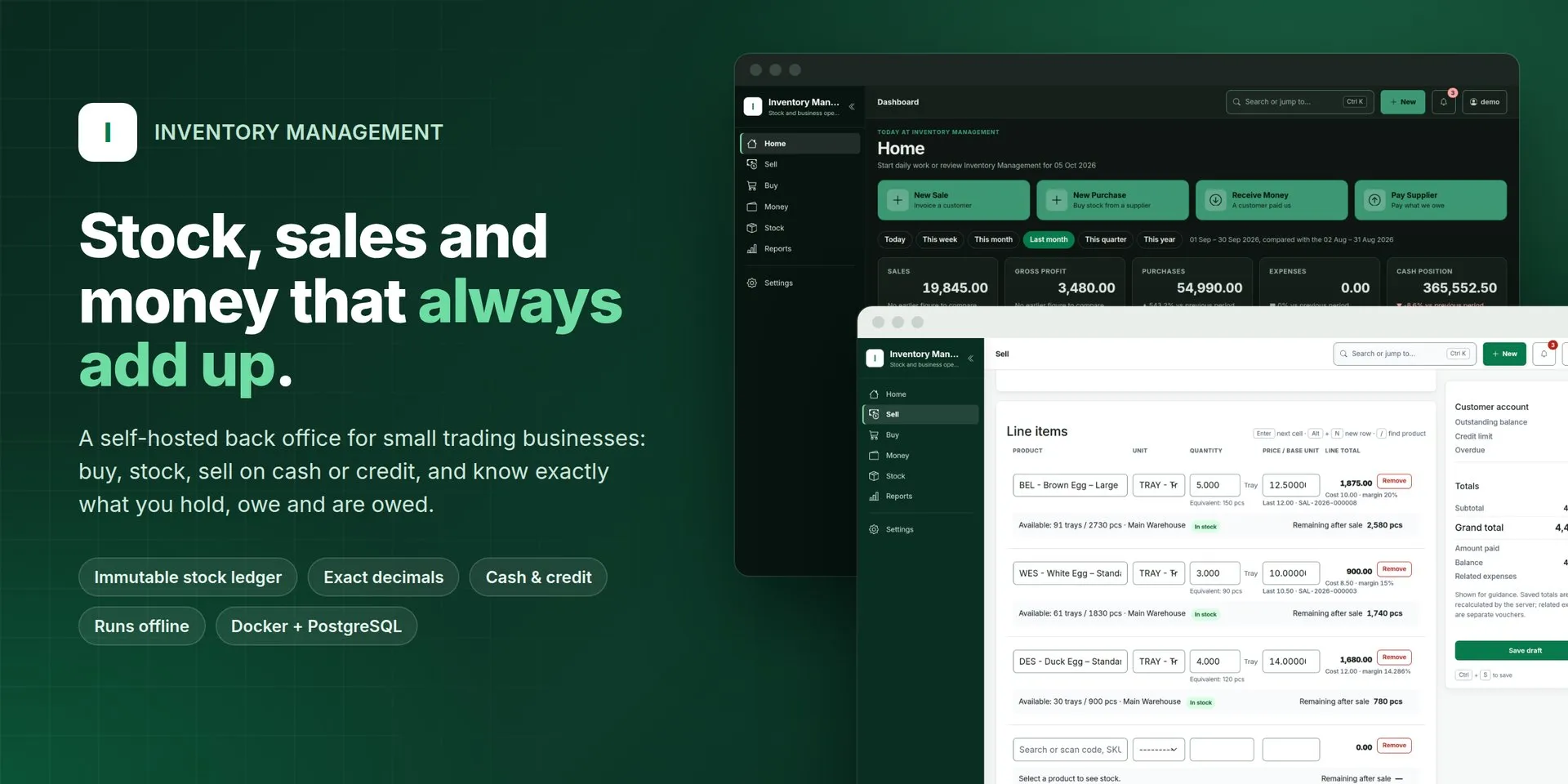
A self-hosted back office for small trading businesses, with stock, sales and money that always add up.
Private: the source code isn't public.
- Runs on
- Docker · NAS or server
- Built with
- Django · PostgreSQL · HTMX
- Works
- Fully offline on a LAN
- Made for
- Shops · wholesalers
What it is
Inventory Management is a web-based inventory and back-office system for small trading businesses: shops, wholesalers and distributors that buy goods, keep stock, sell on cash or credit, and need to know what they hold, what it cost, what they’re owed and what they owe. It started life as an egg-trading application and is growing into a general-purpose system.
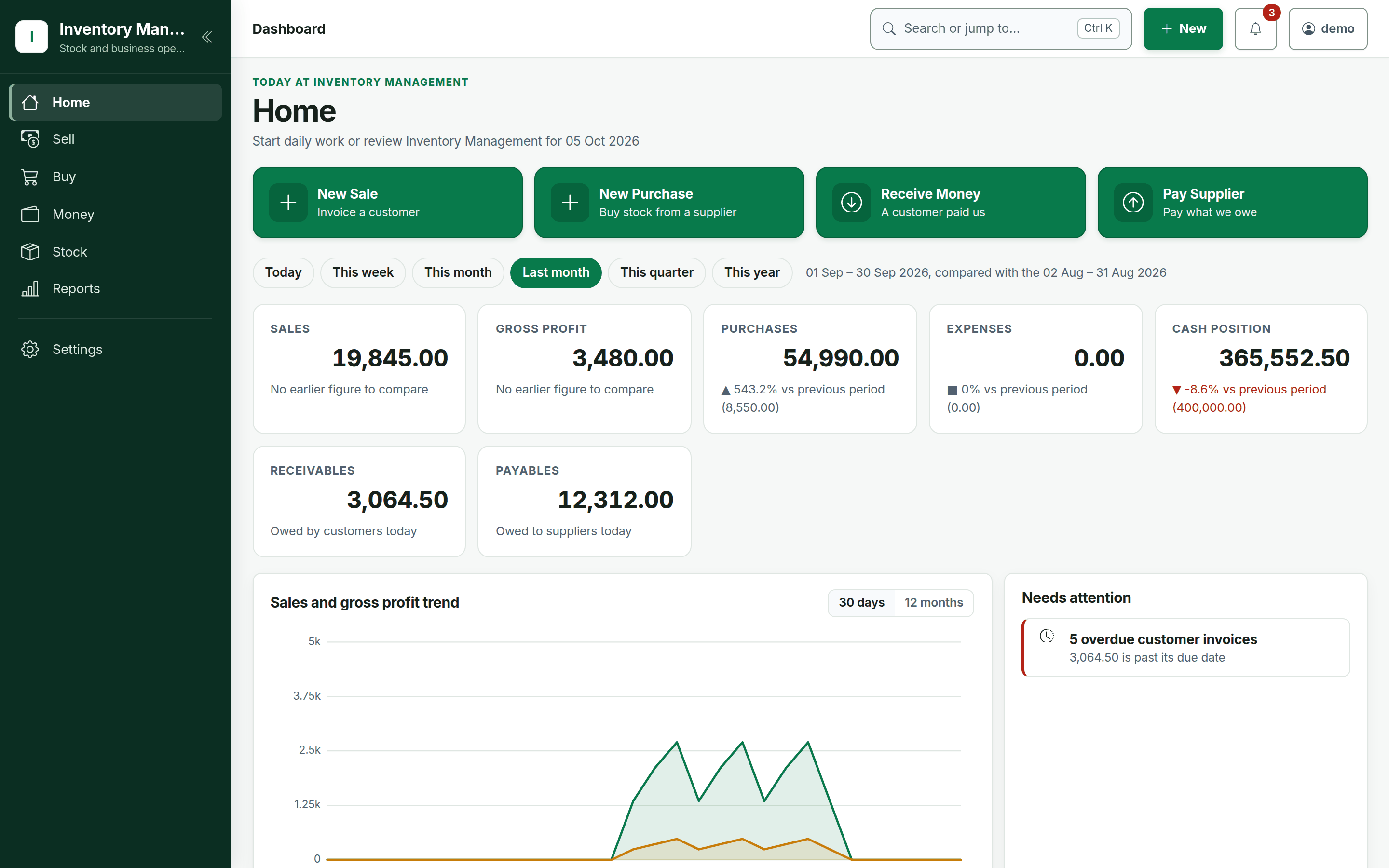
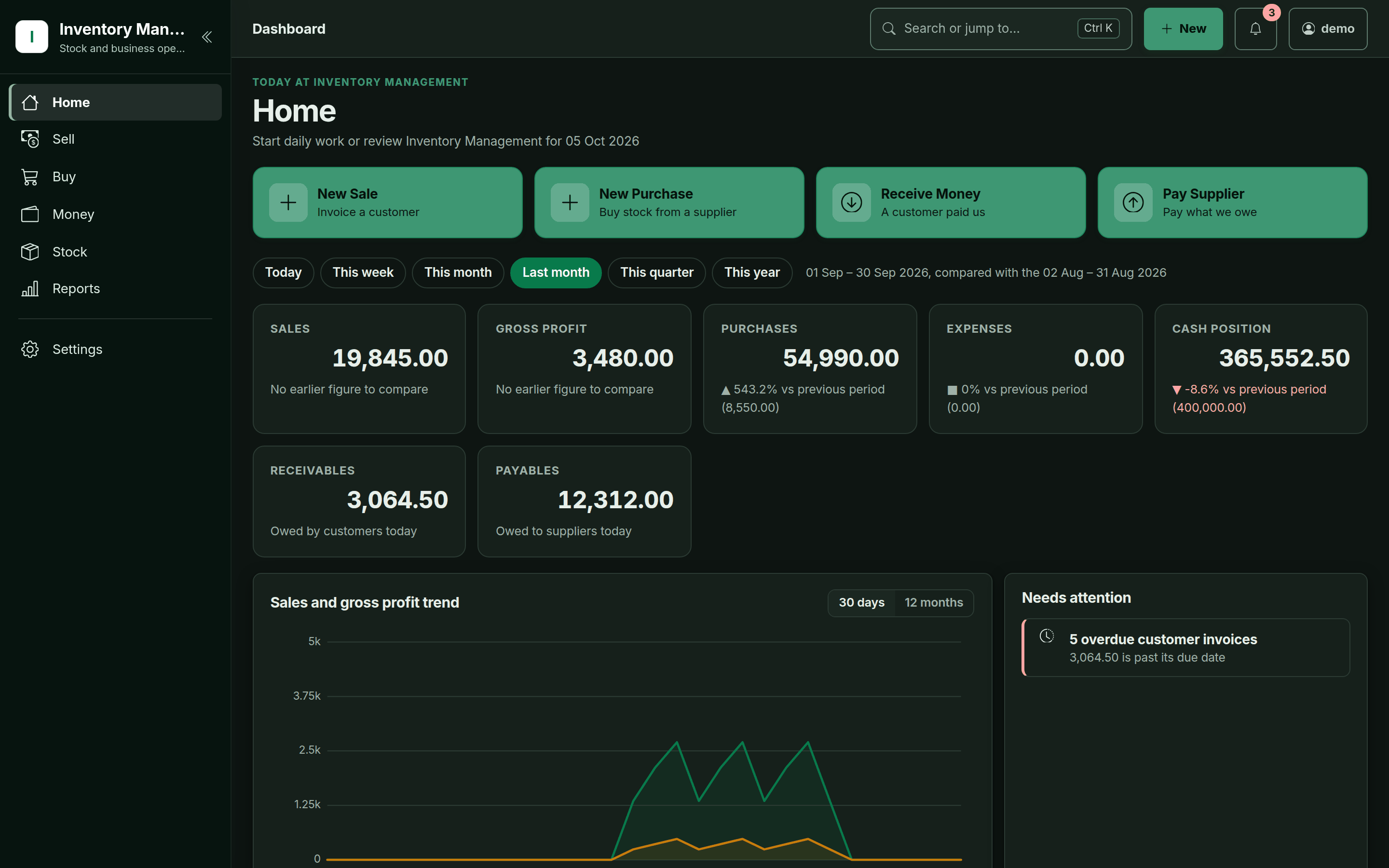
It’s built for the person behind the counter rather than an accountant: plain, task-based screens (Sell, Buy, Money, Stock, Reports), a few clicks per transaction, and numbers that always add up. The screenshots use synthetic demo data.
What it does
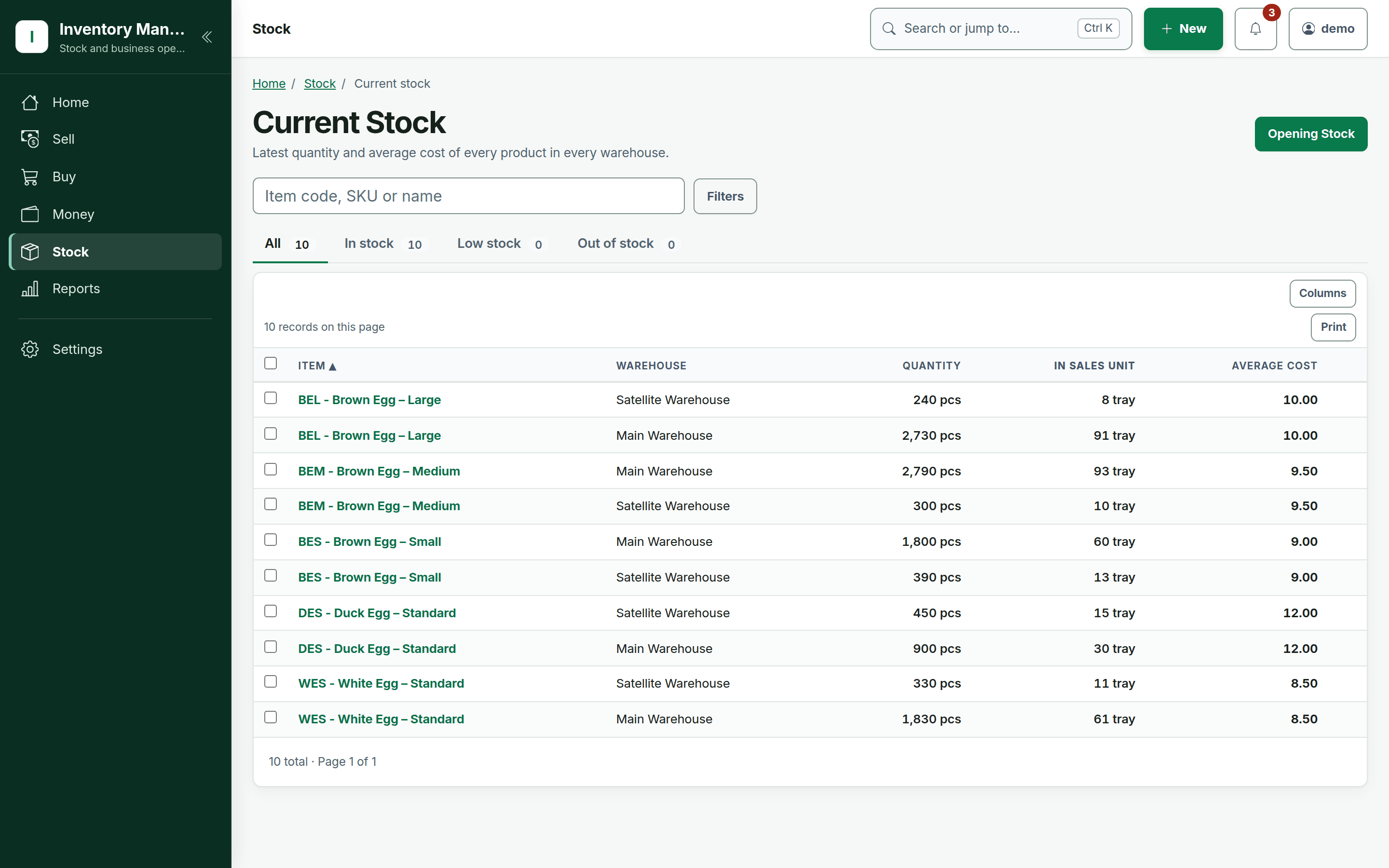
- Products and units. A catalogue with SKUs, barcodes, brands and categories. Units convert exactly, so rice can be bought by the kilogram and sold by the gram while eggs stay in pieces and trays.
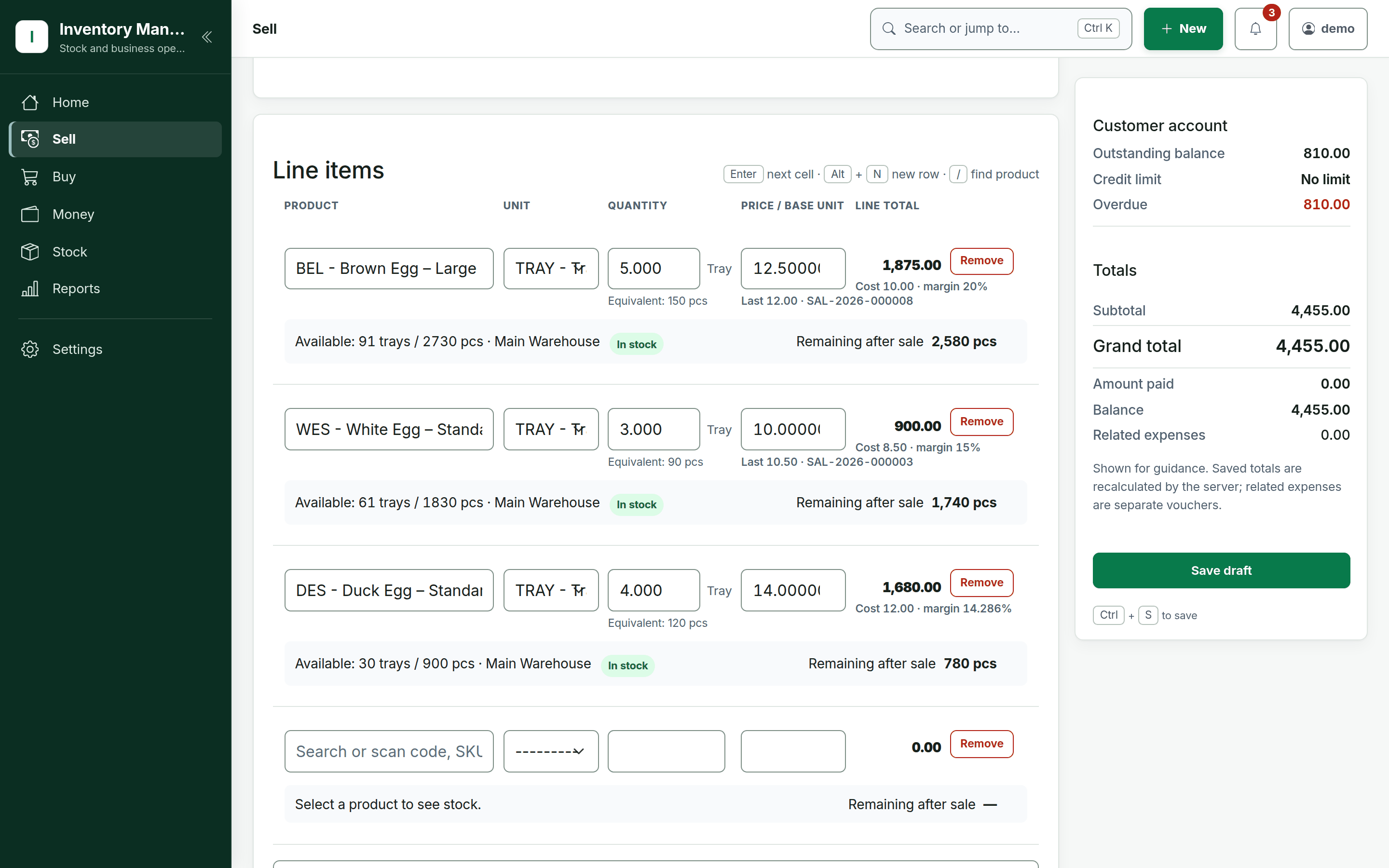
- Stock you can trust. An immutable stock ledger with weighted-average costing per product and warehouse. Stock can’t silently go negative, and posted documents are corrected by reversal, never edited or deleted.
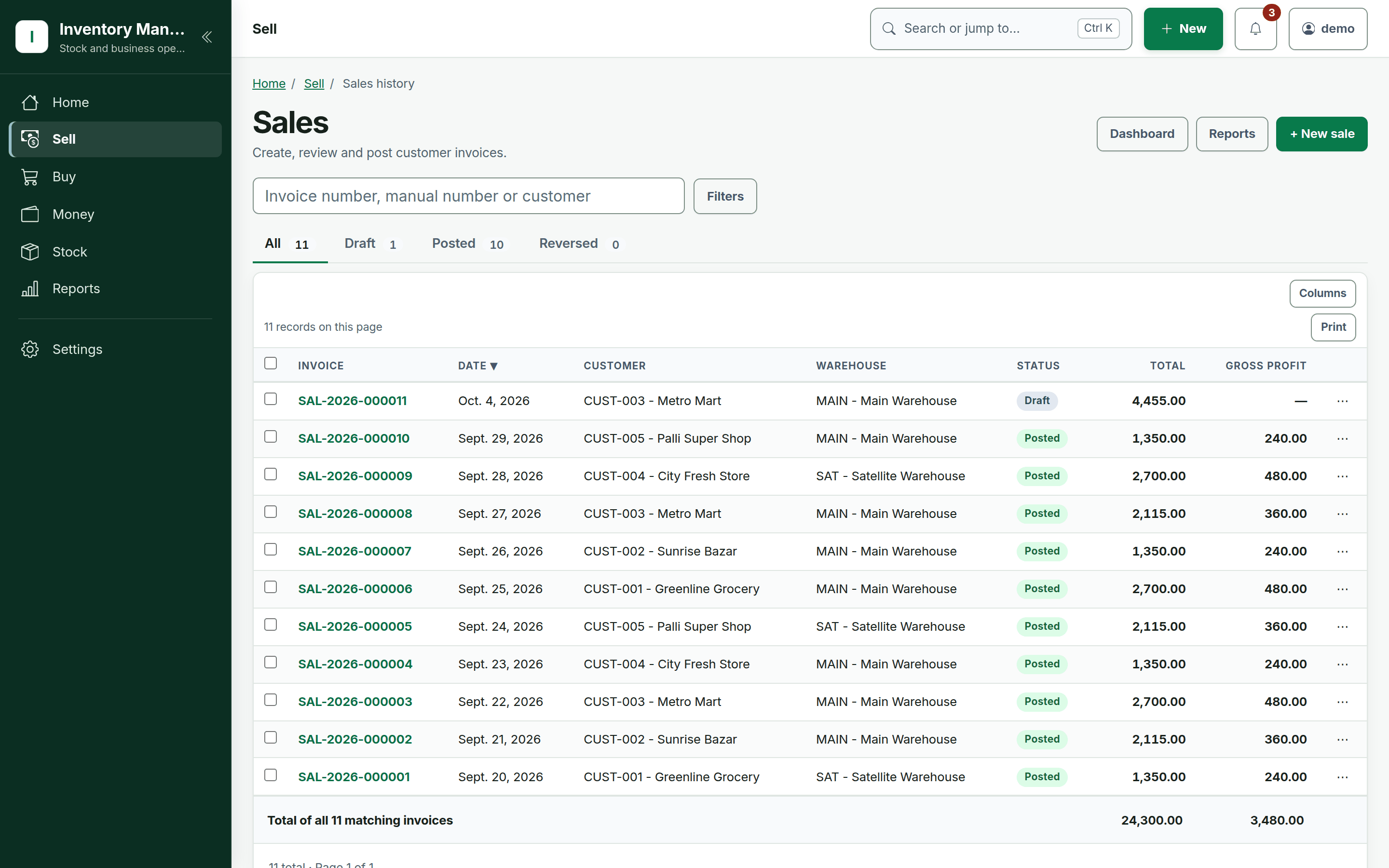
- Buying and selling. Purchases and sales on cash or credit, stock shown as you type, and gross profit on every sale.
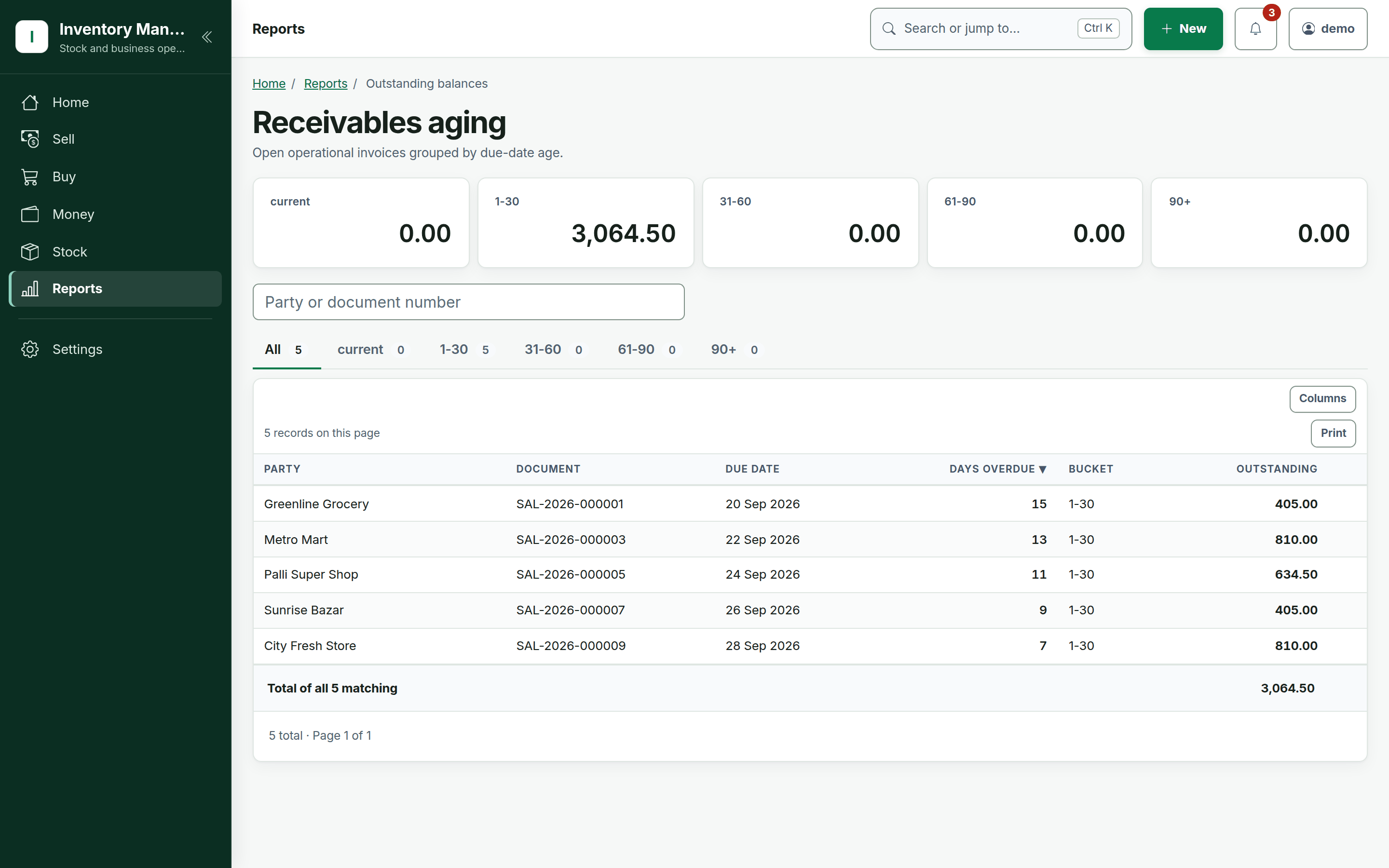
- Money. Customer receipts, supplier payments, expenses and transfers between cash, bank and mobile-money accounts, with balances, statements and ageing.
- Insight. Dashboards, product, customer and supplier analysis, stock value and sales and purchase reports, plus CSV import and export.
- Run it yourself. Roles and permissions, backup and restore from the browser, and no internet needed at runtime.
It’s an operations system, not an accounting package: there’s no general ledger or tax handling, and the screens don’t pretend otherwise.
How it’s built
Django 5.2 on Python 3.13 with PostgreSQL 17, server-rendered templates with HTMX and Bootstrap, and Gunicorn behind Nginx in Docker Compose. Money is always exact decimals, business rules live in tested services, and every screen works without internet access. Tests run with pytest, with Ruff and djlint keeping the code and templates tidy.
Screenshots